
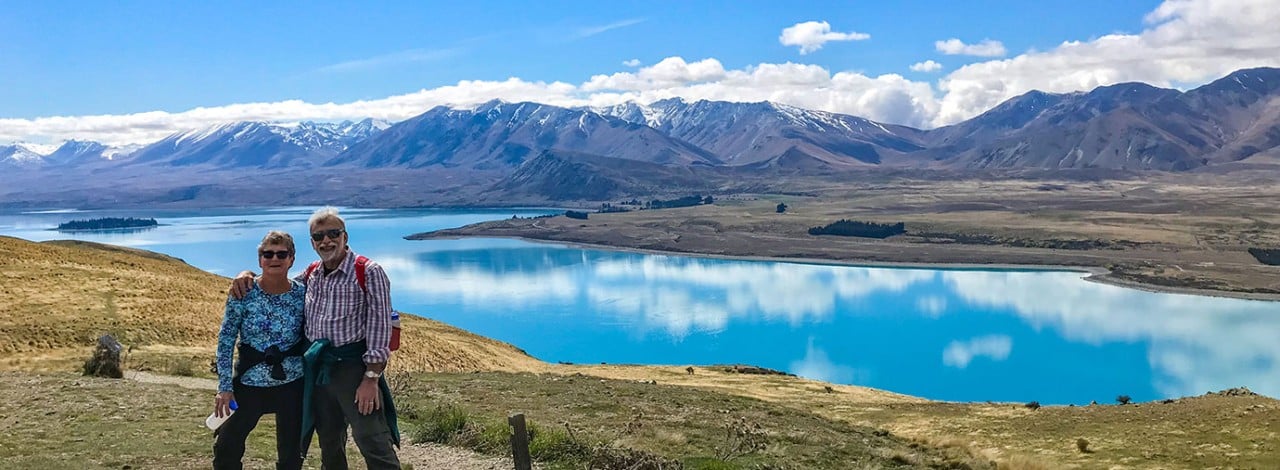
What’s the Best Time for Hiking in New Zealand?

In this article:
1. The short answer: When's the best time to hike in New Zealand? 2. Best time to hike in New Zealand, month by month 3. A quick word on Kiwi hiking lingo 4. Seasonal hiking in New Zealand 5. Hiking New Zealand in Spring 6. Hiking New Zealand in summer (December to February) 7. Hiking New Zealand in autumn (March to May) 8. Hiking New Zealand in winter (June to August) 9. When to walk New Zealand's most famous tracks 10. Common questions about hiking in New Zealand 11. So, what is the best time for hiking in New Zealand?New Zealand is a hiker's paradise, with a network of glorious tracks and trails weaving their way up and down the country. With thousands of kilometres of track spread across the North and South Islands, there's a walk to suit everyone, whatever their age or ability.
If you're planning a trip and hoping to lace up your boots while you're here, you've come to the right place. We're a small team of Kiwis who have spent years showing guests from around the world the very best of our own backyard, and walking these trails ourselves in every season. Exploring New Zealand on foot is one of the finest ways to spend your time here; it gives you unhurried access to the most beautiful corners of the country, and it's a national pastime for Kiwis, so it's a grand way to meet the friendly locals as you share a view together.
With 20 years of experience running the very best New Zealand hiking tours, there’s one question we hear more than any other – “When's the best time for hiking in New Zealand?” Here's our honest, been-there, done-that answer.
The short answer: When's the best time to hike in New Zealand?
Any time across our hiking season, which runs from spring (October) through to autumn (April), is a wonderful time to be on the trails. Through those months the climate is at its kindest for walking, with daytime highs that mostly sit in the comfortable low-to-mid 20s°C (around 70 to 80°F) and long, light days to enjoy them in.
If you press us for favourites, we'll let you in on what our own guides plan their tramps around (a "tramp" is the Kiwi word for a hike) – it's late spring and early autumn. November and December bring wildflowers, lambs in the paddocks, long evenings and a dusting of late snow still clinging to the tops. March and April bring settled weather, golden beech forests and trails that have emptied out after summer. Both give you warm, generous walking without the full swing of the peak-season crowds.
| Trails Tip |
|---|
| If you can pick your dates freely, aim for the back half of March. The summer warmth lingers, the beech is turning gold, the Great Walks are still running until 30 April, and the crowds have thinned right out. It's our favourite window of the whole year. |
If those months sound like your kind of walking, they're exactly the window our trips are built around. Our flagship Masterpiece tour blends proper days on the trail with comfortable lodges each night, while the hiking-focused Kiwi Classic is made for those who love to earn their views. More on which one suits you later. First, let's find your month.
Best time to hike in New Zealand, month by month
| Month | What's the hiking like | Crowds | Especially good for |
|---|---|---|---|
| October | Spring opens. Mild, fresh days, snow on the tops, waterfalls in full flow. | Quiet | Having the trail to yourself |
| November | Warm and settling. Alpine flowers and the first lupins appear. | Quiet | Late-spring colour, fewer people |
| December | Early summer. Long days, light until close to 10pm in the deep south. | Building | Long daylight, the festive buzz |
| January | Warmest and settled, blue skies. | Peak | Long hikes with a cool-off swim |
| February | Warm and settled. | Peak, easing | The coast and the water |
| March | Summer's encore: warm, calm, clear. | Easing | The sweet spot, warm and quiet |
| April | Crisp, clear, autumn gold. Great Walks season ends 30 April. | Quiet | Autumn colour, and a last Great Walk |
| May to Sept | Off-season. Snow on the ranges, many alpine tracks closed, and we don't run trips. | Low | Skiing and snowy scenery (the tops are for experienced trampers only) |
A quick word on Kiwi hiking lingo
To set the scene and avoid any potential misunderstandings out on the trail, we wanted to start by compiling a shortlist of a few common Kiwi words and phrases that you’ll probably hear while you’re researching your trip, or indeed while you’re out and about on some of those New Zealand hikes. It’s by no means exhaustive, but hopefully, it should clear up a few things and avoid confusion!
Tramping:
The uniquely Kiwi way to say you’re going hiking. A ‘tramp’ is a hike, so to say, ‘I’m going tramping’ means ‘I’m going hiking’. Also, a ‘tramper’ is a hiker. You’re going to hear this word A LOT.
Great Walks:
New Zealand’s ‘Great Walks’ consist of ten premier walking trails located up and down the country. Well maintained and extremely popular, the tracks traverse some of our most stunning and iconic scenery. Rightfully famous, they often require booking months in advance, especially during the summer months.
DOC:
DOC stands for Department of Conservation (or ‘Te Papa Atawhai’ in the Māori Te Reo language). It’s a public service department in charge of conserving New Zealand’s natural and historical heritage.
DOC Hut:
The Department of Conservation manages a network of over 950 huts of all shapes and sizes throughout the country. Strategically positioned along the various hiking trails, they provide a warm and welcome place for hikers to rest, shelter from the weather or stay the night during their walk. Basic facilities typically include wood fire, bunk beds with foam mattresses and stored water supply.
Bush:
Native New Zealand forest. You might hear the phrase ‘I’m going bush for the weekend’, which means getting away from it all and spending some time in the great New Zealand outdoors.
Backcountry:
This refers to New Zealand’s largely uninhabited areas of breath-taking natural beauty. A backcountry hike will allow you to head out into the rugged wilderness and soak up New Zealand in all its glory.
Now that you’re suitably clued up on some Kiwi hiking lingo, let’s discover a little more about New Zealand’s seasons and the best time of year to head out for some bush or backcountry tramping!
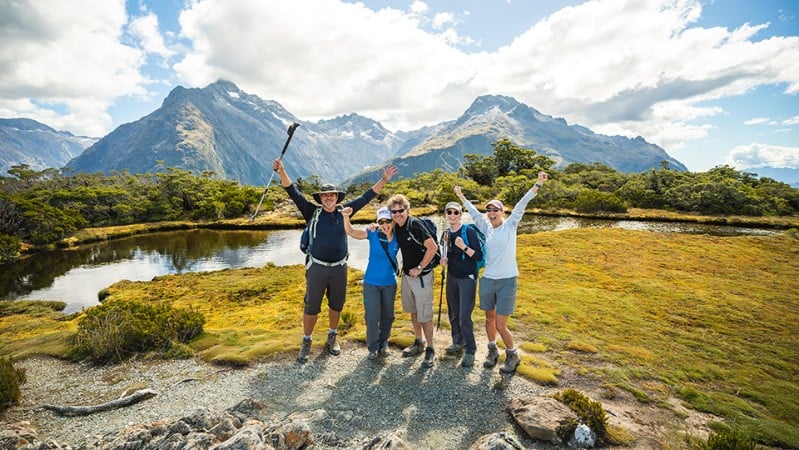
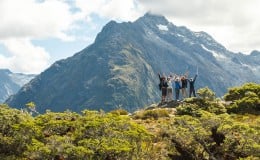
Can't decide when to visit New Zealand? No matter the time of year, Key Summit puts on a show.
Seasonal hiking in New Zealand
New Zealand’s climate is very favourable to hiking, and for the most part, there are no bad times to visit New Zealand, only better times! As a small landmass surrounded by ocean, we enjoy a temperate maritime climate, which means we rarely experience extreme weather conditions either way.
Our climate varies from subtropical in the far north, to temperate in the far south. Most of our National Parks and New Zealand hiking trails are open to walkers year-round, however, the time of year you visit will make a difference to your experience. Let’s investigate the seasons a little further.
Hiking New Zealand in Spring
Spring is when the season wakes up: bright, lengthening days, blossom on the trees, waterfalls roaring with snowmelt, and guides fresh and raring to go. What's not to love? Comfortable temperatures, new growth and plenty of sunshine, rarely too hot or too cold for walking.
The days stretch quickly. Our clocks spring forward on the last Sunday in September, handing back an hour of evening light just as the trails open up. By mid-spring, the sun is up for around 13 to 14 hours, so there's no need to rush. You can take a hike at a gentle pace and linger over the views.
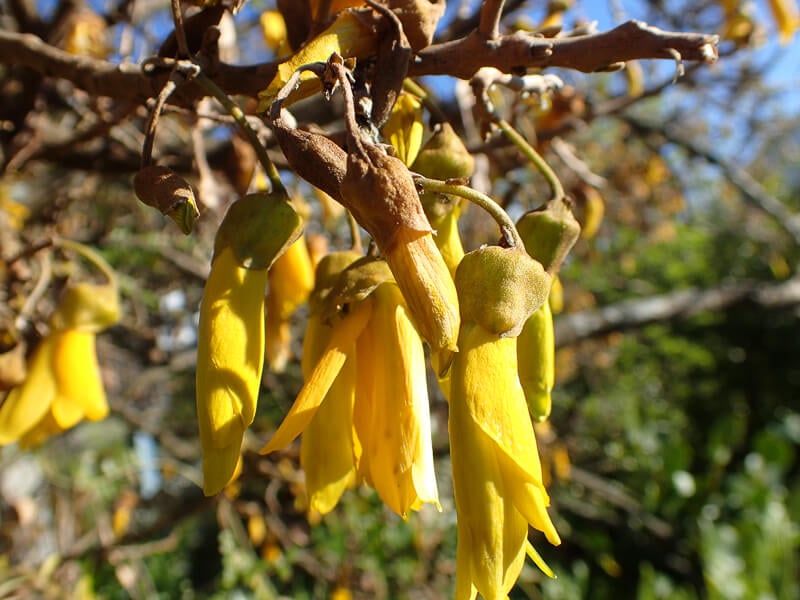
Gorgeous native Kowhai flowers, some of the many blooms that appear during spring in New Zealand.
Spring shows itself in colour. Native kōwhai blaze yellow, harakeke (flax) sends up its flower spikes, and from late spring the famous Russell lupins ring Lake Tekapo in purple, pink and white, with the turquoise lake and the Southern Alps standing behind them. It's one of the most photographed scenes in the country, and one look tells you why. Down in the paddocks, nothing says spring quite like lambs, charging about like joyful lunatics before flopping in the sun, worn out by their own fun. The bush fills with birdsong too, the tūī and bellbird back in full voice.
| Trails Tip |
|---|
| Spring is waterfall season, and Milford Sound/Piopiotahi is at its most dramatic after rain, its sheer walls streaked with hundreds of temporary falls. So don't be disheartened by a wet Fiordland forecast. Rain is precisely when the place puts on its finest show. |
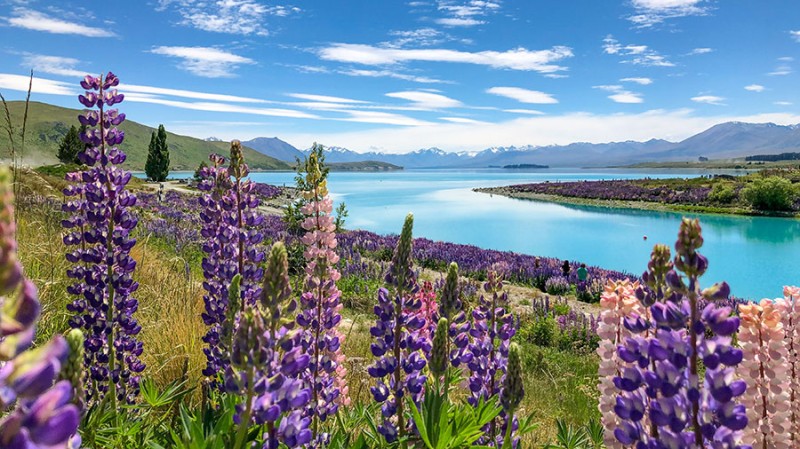
A field of joyful pink and purple Lupins near Lake Tekapo can make spring the best time to hike in New Zealand.
Our favourite spring walk: Key Summit on the Routeburn
This half-day climb is one we never tire of. Part of the famous Routeburn Track in Fiordland National Park, the Key Summit side-trail opens onto sweeping views across the Humboldt and Darran ranges. From The Divide on the Milford Road it's about an hour along the Routeburn before a short, steady climb to the top, where little alpine tarns mirror the surrounding peaks, all the more striking with a spring dusting of snow on them. We walk Key Summit on our Kiwi Classic trip. And check out this guide for 10 of the best day hikes in Fiordland National Park.
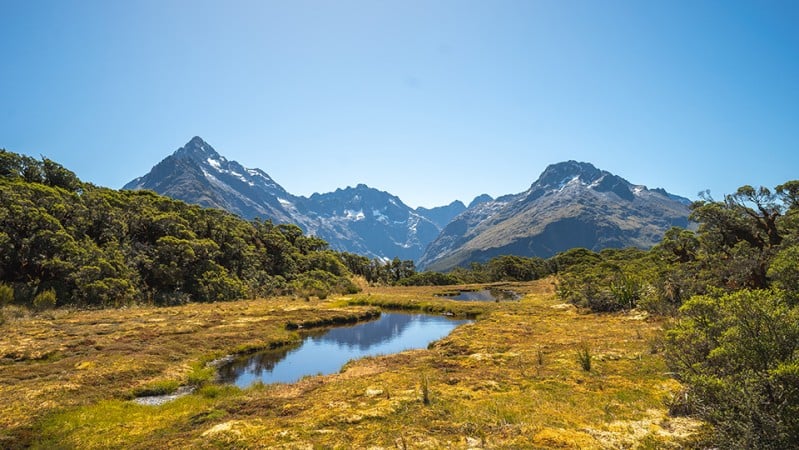
Another stunning day on the Routeburn Track, Key Summit.
Hiking New Zealand in summer (December to February)
Warm, settled weather and long, light evenings make summer a glorious time to be outdoors, and you won't be the only one who thinks so. This is peak season, so for the Great Walks and DOC huts, spaces are at a premium and well worth organising months ahead.
Here's the reassuring part: on a guided trip, you don't have to wrangle any of that. No 6am scramble for a hut booking, no jostling for a bunk, no dawn dash to beat the crowds to the trailhead carpark. With us, you'll day hike the very best sections, end each day with comfortable accommodation, and have the transport taken care of, plus we weave in plenty of quieter, off-the-beaten-track corners so you still get those views to yourself. And even at its busiest, New Zealand rarely feels crowded. With a population of only around 5.3 million and a great deal of wide-open space, there's always room to breathe.
January and February are the warmest months, with daytime highs generally in the low-to-mid 20s°C (around 70 to 80°F), and warmer still inland, where Central Otago and the Mackenzie can nudge the low 30s°C (high 80s°F). The days are gloriously long. At the height of summer the sun rises around 5.30am and lingers until close to 10pm in the deep south, giving you as much as 15 to 16 hours of light. Expect mostly blue skies, with the odd passing shower to keep everything green.
| Trails Tip |
|---|
| If a particular Great Walk is on your wish list for summer, treat the booking window like a concert ticket. DOC's Great Walk bookings open months ahead, and the most sought-after dates on the Milford and Routeburn can vanish within the hour. Walking with us on our Great Walk Adventure takes that worry off your plate with all the details taken care of. |
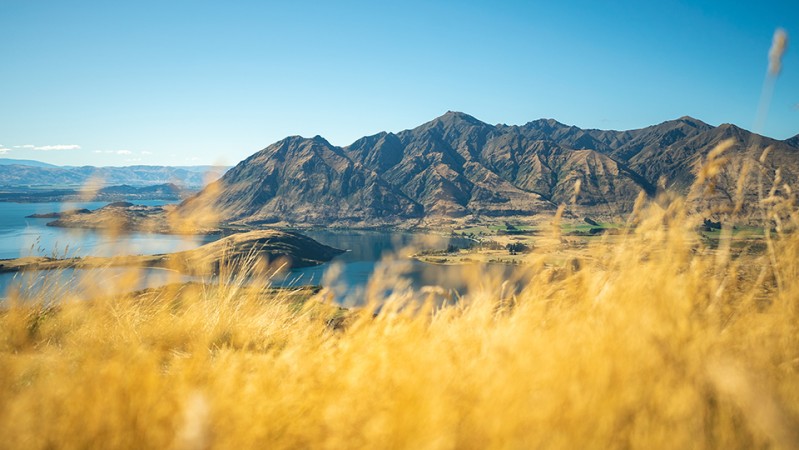
A late summer's day on the Rocky Mountain trail.
Our favourite summer walk: Abel Tasman
Abel Tasman is our smallest national park and one of our most loved, all golden-sand beaches, clear water and lush coastal forest. Reachable by boat, kayak or on foot, it's made for a warm summer's day, whether you walk a single sun-soaked section or string several together. We reckon we've found the finest way to do it on our Grand Explorer trip, with a couple of unhurried nights right on the coast for walking, kayaking and slowing right down.
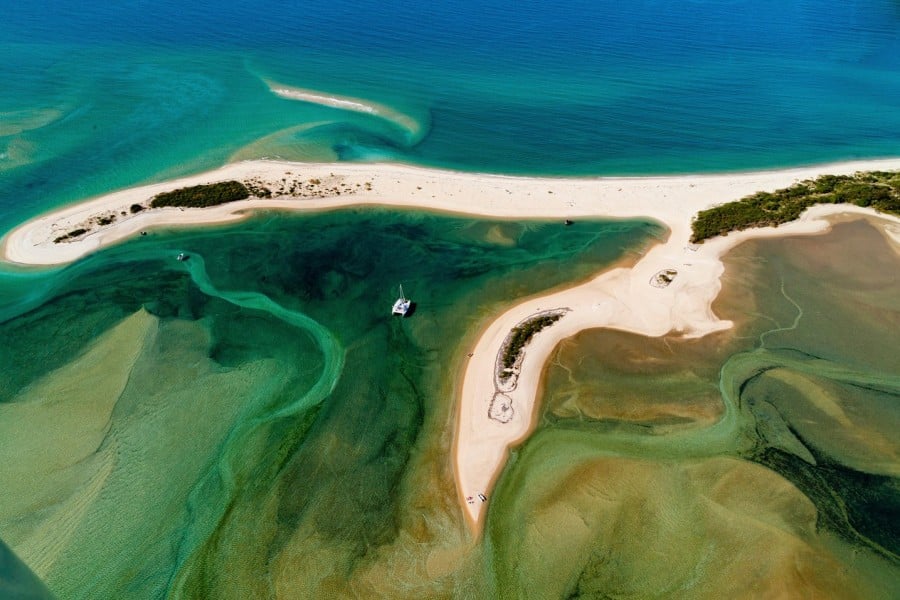
The golden sand beaches of Abel Tasman National Park in summer
Hiking New Zealand in autumn (March to May)
Dazzling colour, long sunny days and quieter trails make autumn a season many of our guides hold dearest, and the first few weeks of March often still feel like high summer.
March and April are the gems. Daytime temperatures in March generally sit around 18 to 23°C (64 to 73°F), only a touch cooler than summer, and April settles to a comfortable 16 to 20°C (61 to 68°F). By May the South Island cools in earnest, with the odd frost and daytime highs that can dip below 10°C (50°F), so if you're after a true autumn walking holiday rather than a winter sampler, aim for March or April.
These two months serve up some of the most dependable weather of the year: long fine spells, blue skies and little wind or rain. A few degrees cooler than summer, it's ideal for stretching the legs without breaking a sweat. With the school holidays over, even the famous trails that hum over summer fall noticeably quiet.
Then there's the colour. As the foliage turns, the hillsides go up in fiery reds and golds, and the South Island is especially glorious, with Wānaka, Queenstown and the old gold-mining village of Arrowtown all ablaze. Arrowtown celebrates with its Autumn Festival each April, and the vineyards swing into harvest, with farmers' markets brimming. A fine season to be a hungry hiker.
| Trails Tip |
|---|
| The Great Walks have a serviced season that ends on 30 April. If an autumn Great Walk is the dream, plan for March or the first half of April so you don't miss the boat. After that the huts wind down, the bridges come out, and the alpine sections become a far more serious proposition. |
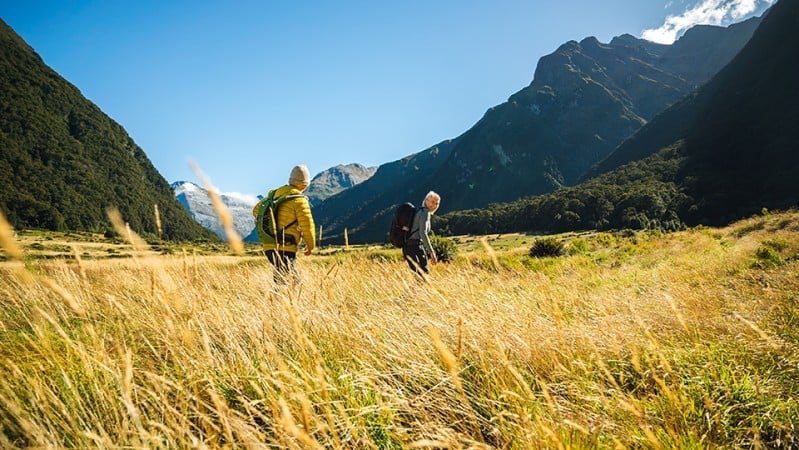
Autumn hiking in Siberia Valley is some of the best there is.
Our favourite autumn walk: the Milford Track
Perhaps our most famous walk, the Milford Track draws walkers from around the globe into the heart of Fiordland. Following the early pioneers from the head of Lake Te Anau through to Milford, you'll cross valleys and a mountain pass, thread through thick beech forest, and marvel at waterfalls tumbling from every wall. One local tip the brochures tend to skip: near the water at dusk, the sandflies (namu) come out in force, so keep a dab of repellent within reach. At 53.5km (33.2 miles) one way, it's a proper journey, and a deeply rewarding one. You can walk it with us on our New Zealand Great Walk Adventure South and Grand Explorer trips. For the finer detail on timing, see our guide to the best time to walk the Milford Track.
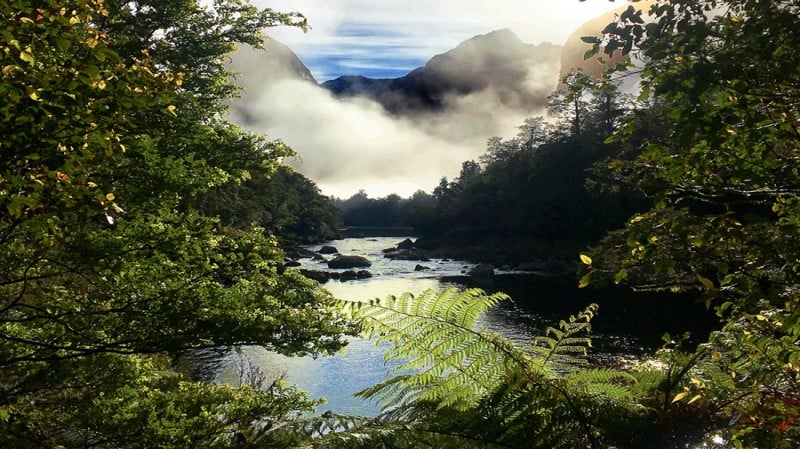
The views on the Milford Track are nothing short of amazing, and one of the best New Zealand hikes.
Hiking New Zealand in winter (June to August)
We'll give it to you straight: New Zealand Trails doesn't run trips in winter, and many of the famous walks close. It's still a beautiful season, mind, a grand time for skiing and snow-dusted scenery. It simply isn't our walking season.
Winter brings our most consistently cold weather, though likely nothing like a North American or Northern European one. On the North Island, daytime temperatures usually settle between 10 and 16°C (50 to 61°F), with the odd inland frost. The far north stays mild enough that locals call it the "Winterless North". The South Island sees more extremes, with regular frosts, daytime highs that struggle past 10°C (50°F), and snow down to low levels in the alpine areas.
We run our season from spring to autumn so our guests get the full diversity of the landscape, with the tracks open and the days long. If you are planning a winter visit, a few words from us.
| Trails Tip |
|---|
| Be prepared, and don't go it alone up high. Many famous walks can't be safely accessed in winter because of snow and avalanche risk, and outside the Great Walks season the huts and bridges wind right down. Talk to DOC, check conditions, and when in doubt keep to lower-level walks closer to town. Dress in layers (merino wool is a wise investment, warm even when it's damp), choose boots with a grippy sole for ice, and pack a hat and gloves. Get the gear right and winter walking turns from miserable to exhilarating. Our New Zealand packing list has the full run-down. |
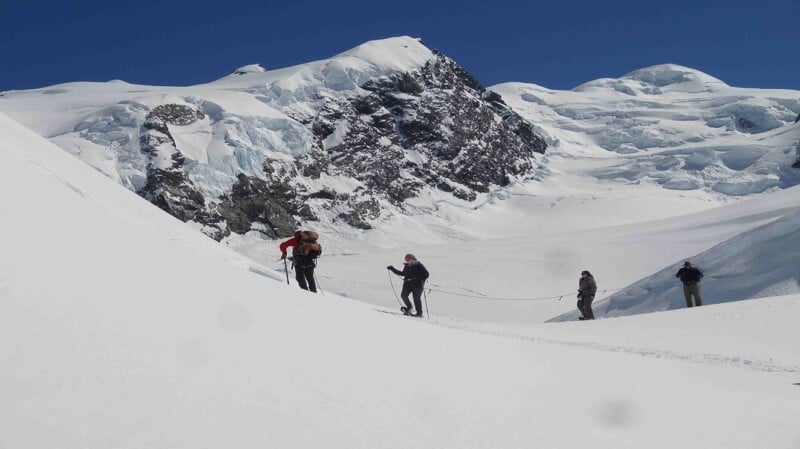
Instead of walking in winter, Kiwis prefer to engage in snow activities! Keep that in mind if you're wondering when to visit New Zealand.
New Zealand Trails’ tips for winter hiking
✔ Be prepared
Many of New Zealand’s most famous walks simply can’t be accessed over the winter months due to snowfall and dangerous conditions. If you are going to head out on an unguided hike into backcountry areas over winter, ensure that you chat with DOC and stay updated on track and weather conditions. Outside of the Great Walks season, facilities, including bridges, are greatly reduced and flood and avalanche risks exist, so you need to have plenty of experience and be prepared for these conditions.
We can’t stress enough how changeable conditions can be over the winter months in these isolated areas. Cell coverage is limited, and you won’t find many other people out on the track, so if in any doubt, stick to low-level hikes in more populated areas.
✔ Stay warm
The days are shorter and colder, so you’ll want to dress warmly even if you’re just out for a short hike. Always bring a few additional layers in your day pack just in case. Merino wool is a great investment and will keep you warm, snug and dry underneath your outer layers. Choose boots or shoes with a good grippy sole for ice and snow days and remember your hat and gloves. If you’ve got the proper gear, winter in New Zealand can be exhilarating and refreshing, if not, you might just wind up shivering in the local coffee shop the whole time!
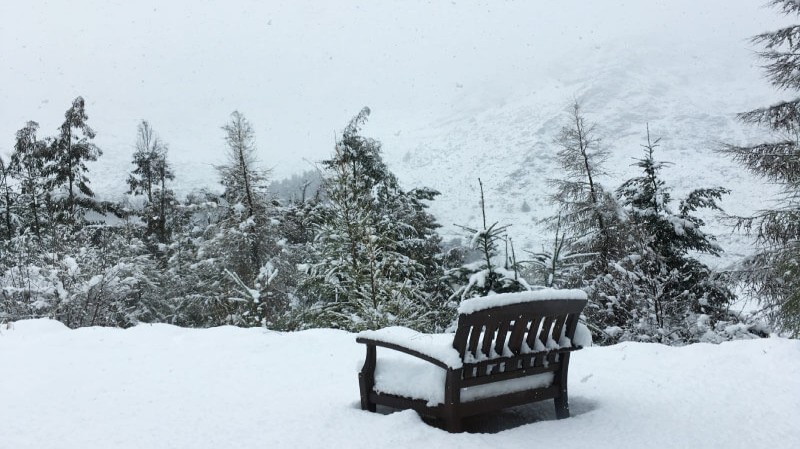
Yes, it certainly snows like this from time to time in New Zealand!
When to walk New Zealand's most famous tracks
The general seasons are one thing, and each of the big-name tracks has its own rhythm too. Here's our quick take on when to walk them, all of which sit firmly in the warmer half of the year. We walk sections of several on trips like the Masterpiece and Kiwi Classic, so we've come to know their moods season by season.
| Track | Best time to walk | Good to know |
|---|---|---|
| Milford Track | December to February for warmth; late November and April for fewer people | Great Walks season late October to 30 April. Books out fast, so plan well ahead |
| Routeburn Track | December to March; autumn is a Fiordland favourite | Alpine and exposed. Outside the serviced season it's for experienced trampers only |
| Kepler Track | December to April; late March is our pick | Loops from Te Anau. Serviced season late October to 30 April |
| Abel Tasman Coast Track | Year-round; summer for swimming, autumn for the calm | The mildest of the big walks, lovely even in the cooler months |
| Tongariro Alpine Crossing | October to April; March and April the quietest | A high alpine day walk. Weather turns fast, so pick a settled day |
Two of these have their own deep-dive guides worth a read while you plan: our Routeburn Track weather guide and Kepler Track weather guide.
If the North Island is on your route, the Tongariro Alpine Crossing is the standout day walk, a 20.2km (12.5 miles) traverse of an otherworldly volcanic landscape of turquoise crater lakes and red-brown scoria, set in our oldest national park. The best months are March and April, once the summer queues have eased. You can walk it with us on our New Zealand Great Walk Adventure North tour, where we make an early start, watch the weather and carry the snacks. You just lace up and enjoy.
Common questions about hiking in New Zealand
What is the best time of year to hike in New Zealand?
The warmer half of the year, roughly November to April. December to March is the most reliable for warmth and long days, while late spring (November) and early autumn (March and April) give you the same fine walking with quieter trails. They're our pick of the lot.
Can you hike in New Zealand in winter?
Yes, at lower levels and with care, though many alpine tracks and all the Great Walks wind down from around May to October because of snow and avalanche risk. Winter walking up high is for experienced, well-equipped trampers only, and we don't run guided trips over those months.
What is the warmest time to hike in New Zealand?
January and February, when daytime highs generally reach the low-to-mid 20s°C (around 70 to 80°F), and hotter still in the inland basins of Central Otago and the Mackenzie. Pair a warm-day walk with a cool-off swim in a lake or river and you'll see why summer is so loved.
What is the cheapest time to hike in New Zealand?
The shoulder months, especially October and April, tend to bring the best airfares and the easiest availability, with lovely walking weather to match. It's one more reason we're so fond of an early-autumn trip.
So, what is the best time for hiking in New Zealand?
We hope this season-by-season wander has helped you picture your trip. The weather here has a mind of its own, and that's part of the charm. Whenever you come, you'll have a wonderful time in Aotearoa, the land of the long white cloud. If you want our honest pick, it's late spring and early autumn: November and December, or March and April. Warm, settled walking, vivid scenery, long light, and trails that feel like your own.
Whichever month calls to you, our season kicks off every October, when our fully guided New Zealand hiking tours set off around the country once more. If you'd love to earn your views on foot, the Kiwi Classic is built for keen walkers; if you'd rather pair proper days on the trail with comfort and a little indulgence each night, the Masterpiece and Grand Explorer are made for you. All of them run right through those sweet-spot months. Got less time up your sleeve? The shorter Pure South packs a lot of South Island into a single week.
And don't just take it from us:
"We absolutely could not be happier with our experience with New Zealand Trails. Everyone person we dealt with was friendly, knowledgeable, and professional. Robyn and Becca were our contacts at the office, and they were extremely helpful guiding us through the online portal and answering every question we had. Our guides were also amazing. Ross and Faz were the best guides we have ever been on a tour with. Their positive attitudes, resourcefulness, and knowledge of all things Kiwi made a great trip fantastic. New Zealand is a beautiful, welcoming and inspiring country, and the folks at New Zealand Trails made it the trip of a lifetime for us!"
- Mark Curtice, Pure South, April 2026
Still weighing up the whole trip, not just the hiking? Have a read of our companion guide on the best time to visit New Zealand, then request your free brochure for a proper look at where each season could take you. We'd love to help you find your month, and then show you around our backyard.
Happy tramping. We can't wait to welcome you.
Other articles you may like:
- Luxury Hiking in New Zealand
- Hiking Preparation - 5 Tips to Get Ready
- The Great Walks of New Zealand
- The Best New Zealand Small Group Tours
- Get your free New Zealand Trails guided tour brochure
Last Updated: 11/06/2026
Recent articles
New Zealand Bucket List...with a Twist: 15 Experiences Only a Local Would Tell You
Explore New Zealand
Walking and Hiking- 10 Best Day Hikes in Fiordland National Park
- Luxury Hiking in New Zealand: A Kiwi Guide to Doing It in Style
- The Ultimate 5-Day New Zealand Great Walk Itinerary
- Hiking the Milford Track in October
- Hiking the Kepler Track in October
- Hiking the Kepler Track in Winter | Weather Guide
- Hiking the Kepler Track in February
- Hiking the Kepler Track in January
- Hiking the Kepler Track in December
- Heaphy Track Weather Guide for Hikers
- Lake Waikaremoana Track
- Milford Track Weather Guide for Hikers
- The Routeburn Track Weather Guide for Hikers
- Kepler Track Weather Guide For Hikers
- 13 Best Multi-Day Hikes in the South Island, New Zealand
- Exploring New Zealand’s Siberia Valley
- Day Walks on New Zealand's Great Walks - South Island
- Hiking the Rakiura Track, Stewart Island's Great Walk
- The Kepler Track | A Complete Guide
- Hiking in New Zealand for Your Bucket List
- 12 Best New Zealand Day Hikes
- Hiking the Milford Track in New Zealand: A Local's Complete Guide
- The Top 10 Lesser Known Walks of New Zealand
- Great Walks of New Zealand
- Best Walks in New Zealand
- Routeburn & Milford Track | Best Day Hikes
- The Perfect Two Weeks in New Zealand's South Island: A Walker's Itinerary
- Adventure Over 50 – A Day on a New Zealand Trails Tour
- Caring for Aotearoa - What is the Tiaki Promise?
- Conservation & Regeneration At New Zealand Trails
- The Routeburn Track Weather Guide for Hikers
- Kepler Track Weather Guide For Hikers
- The Perfect Trip to Replace Your Cancelled REI New Zealand Adventure
- Keeping You Safe in the Post Covid-19 Era
- New Zealand Accommodation on our Trips
- The Finer Touches at New Zealand Trails
- Kiwi Hospitality and the New Zealand Way
- The Qualmark Gold Standard Award
- The Best New Zealand Small Group Tours
- 3 Dream Places to Stay in New Zealand
- Our Best Photos of New Zealand from 2017-2018
- Hiking in New Zealand 2016 Season
- Why Join a Guided New Zealand Hiking Tour?
- Exploring New Zealand's World Heritage Sites
- Hiking the Kepler Track in February
- New Zealand Cuisine | Food in New Zealand
- A Guide to New Zealand Wine Regions
- Guide to New Zealand’s Coffee Culture
- Guided Tours of New Zealand: How to Choose the Right One
- The Perfect Two Weeks in New Zealand's South Island: A Walker's Itinerary
- Why New Zealand is the Perfect Place for Adventure Over 50
- New Zealand Travel Tips for a Stress-Free Adventure
- How to Make the Most of Your New Zealand Adventure (and Avoid the Crowds)
- Why More Travellers Are Choosing Guided Adventure Tours in New Zealand
- Women Travelling Together - New Zealand Group Tours For Women
- Travel Solo, Not Alone: Group Tours for Solo Travellers
- The Rise of Solo Travel in New Zealand: Taking the Scenic Route on Your Own
- New Zealand - The Perfect Place For Solo Travel
- Why Autumn is the Best Time to Visit New Zealand
- Travel Tips for Hiking in New Zealand
- New Zealand's Best Waterfalls
- The Best Places to Visit on New Zealand's West Coast
- Top 10 New Zealand Adventures
- Hiking the Kepler Track in November
- The Best South Island New Zealand Adventures
- Top Tips for your Free Day
- The ultimate New Zealand luxury tour - Part 2
- The ultimate New Zealand luxury tour - Part 1
- Why do a New Zealand guided hiking tour?
- Our New Zealand Hiking Guides
- Hiking the Kepler Track in January
- Heaphy Track Weather Guide for Hikers
- Milford Track Weather Guide for Hikers
- Kepler Track Weather Guide For Hikers
- 10 Best Places to Kayak in New Zealand
- Riding the Queenstown Trail
- Sounds of New Zealand - New Zealand Music
- 9 Must-See New Zealand Movies
- 10 of the Best New Zealand Books
- 13 Things You May Not Know About New Zealand
- How to book your New Zealand trip
- 10 South Island Secrets
- Why Do I Need New Zealand Travel Insurance?
- New Zealand Solo Travel and Hiking
- What Is the Best Way to Travel New Zealand?
- Australia vs New Zealand | Which is Best?
- What to Pack for New Zealand
- World Heritage Walking Tour - Is It For Me?
- Flights to New Zealand: How to Get Here
- When is the Best Time to Visit New Zealand?
- What’s the Best Time for Hiking in New Zealand?
- Conservation & Regeneration At New Zealand Trails
- Why October is a great time to visit Stewart Island
- Hiking the Routeburn Track in Winter
- Hiking the Milford Track in Winter
- Hiking the Milford Track in December
- Hiking the Milford Track in November
- Hiking the Milford Track in October
- Hiking the Kepler Track in November
- Hiking the Kepler Track in October
- Hiking the Kepler Track in Winter | Weather Guide
- Hiking the Kepler Track in March
- Hiking the Kepler Track in February
- Hiking the Kepler Track in January
- Hiking the Kepler Track in December
- Heaphy Track Weather Guide for Hikers
- Milford Track Weather Guide for Hikers
- The Routeburn Track Weather Guide for Hikers
- Kepler Track Weather Guide For Hikers
- Best places to visit during spring in New Zealand
- Spring in New Zealand – A Special Time of Year!
- New Zealand Seasons: Which One Suits You Best?
- When is the Best Time to Visit New Zealand?
- 5 Reasons to Visit During Spring in New Zealand
- Why You’ll Love Spring Hiking in New Zealand
- New Zealand Bucket List...with a Twist: 15 Experiences Only a Local Would Tell You
- A Journey Through Time: The Whanganui River Journey
- The Best Places to Visit on New Zealand's West Coast
- Travel like it used to be | 24 hours on Stewart Island
- Top 10 New Zealand Adventures
- Top Tips for your Free Day
- The Most Beautiful Lakes In The South Island
- Hiking the Kepler Track in January
- Arrowtown - A Few Hours To Explore
- Top 15 things to do in Queenstown
- Top 5 things to do on Stewart Island
- The Best Beaches in New Zealand
- 10 of New Zealand's Best Backroad Experiences
- New Zealand Tours | Lord of the Rings
- New Zealand National Parks | A Complete Guide
- New Zealand Mountains
- North vs South Island | Which To Visit?
- Hike and Kayak Abel Tasman National Park
- Queenstown | Adventure Capital of the World
- 5 Reasons Milford Sound is Best in the Rain
- 24 Hours in Queenstown
- Walking the Hollyford Track
- Hiking the Routeburn Track
- The Best Glacier Hiking in New Zealand
- Castle Hill and Arthurs Pass Hiking
- New Zealand Penguins
- New Zealand Birds - NZ's Unique Parrots
- Conservation in New Zealand – Protecting New Zealand’s Kiwi Bird
- New Zealand Nature: What to Expect
- Kiwi Bird | The New Zealand National Bird
- New Zealand Wildlife | Our Top 14 NZ Animals
- The Perfect Two Weeks in New Zealand's South Island: A Walker's Itinerary
- The Ultimate 5-Day New Zealand Great Walk Itinerary
- Top 5 New Zealand Hiking Destinations
- Best Autumn Hikes in New Zealand
- Hiking the Routeburn Track in Winter
- Hiking the Milford Track in Winter
- Hiking the Routeburn Track in October
- Hiking the Milford Track in December
- Hiking the Milford Track in November
- Hiking the Milford Track in October
- Hiking the Kepler Track in November
- Hiking the Kepler Track in October
- Hiking the Kepler Track in Winter | Weather Guide
- Hiking the Kepler Track in January
- The Routeburn Track Weather Guide for Hikers
- Kepler Track Weather Guide For Hikers
- The Ultimate Guide to Hiking in New Zealand
- Top 10 Tips to Keep You Safe on the Trails
- Keep Safe with Mountain Safety Council
- The Ultimate New Zealand Packing List
- Hiking New Zealand Guide
- Hiking Preparation - 5 Tips To Get Ready
- How to Use Trekking Poles Video
- How to Choose Hiking Boots Video
- What to Wear Hiking in New Zealand Video
- The Best Time to Hike the Milford Track
- The Best South Island New Zealand Adventures
- Top Tips for your Free Day
- Hiking the Kepler Track in February
- Top 15 things to do in Queenstown
- 10 of New Zealand's Favourite Sports
- The Best Spots for Stargazing in New Zealand
- Top 50 Best Things To Do In New Zealand
- Scenic Flight into the NZ Wilderness
- Nile River Glow Worm Caves & Punakaiki
- Travel like it used to be | 24 hours on Stewart Island
- The Most Beautiful Lakes In The South Island
- Visiting Doubtful Sound
- Geothermal New Zealand | Rotorua
- New Zealand Redwoods Forest
- Waitomo Caves
- Exploring Cathedral Cove
- Huka Falls & Lake Taupo
- Exploring the Coromandel Coast
- The Kepler Track | A Complete Guide
- Hiking Mt Crichton Loop Track
- Things to do in Christchurch
- The Ultimate Guide to the Routeburn Track
- Fiordland National Park
- Franz Josef Glacier
- Queen Charlotte Sound & Marlborough Wineries
- Kaikoura Peninsula
- Ben Lomond | Queenstown’s best day hike
- Mount Aspiring National Park
- Lake Tekapo & Mount John
- Paparoa National Park
- Okarito | A Complete Guide
- Arthur's Pass New Zealand
- Tongariro Crossing
- Guide to Aoraki/Mt Cook National Park
- The Ultimate Guide to Visiting Milford Sound
- Mou Waho Island | Wanaka
Search Articles

"Amazing tour guides who know how to create an environment of fun, while keeping everyone engaged and SAFE. Would highly recommend it. LOVED New Zealand and all its beauty, and this was probably our best tour vacation (and we travel pretty extensively)." - Wendy Donnan